Internal Labyrinths
Solo exhibition, Triumph Gallery, 2018
Moscow
Curator: Polina Mogilina
The Depth gave you millions of mirrors, diver. Magical mirrors. You can see yourself. You can see the world - any of its corners. You can paint your own world — for it to come alive, reflected in a mirror. It is an incredible gift.
From 'Labyrinth of Reflections' by Sergey Lukyanenko
In the science fiction tradition, the utopia sub-genre fundamentally rests on the idea of the world around us being an illusion and introduces a multitude of alternative routes for social development. In Labyrinth of Reflections (1997), Russian author Sergey Lukyanenko addresses the image of Depth — a virtual world of the future in the form of a single virtual space, Deeptown. It is a place for billions of people from around the world to jack into the system and go into an alternate reality, where dreams come true and phantasies materialize. It was basically at the same time as the first computer technologies emerged that people began dreaming about the feasibility of creating an illusion of life, as true to life as possible by engaging all senses; this book by the Russian sci-fi writer is one of the more colorful and impactful representations of the dream. Historically, the search for alternate worlds is rooted in antiquity and Plato's allegory of the cave. As people, we are always looking for spaces other than reality. One of the means to open portals into other worlds is art. It was art that gave us completely free rein in worldbuilding. As if trying to escape their immediate reality, artists, writers, composers create their own reality, with its own laws, a more perfect and beautiful reality.
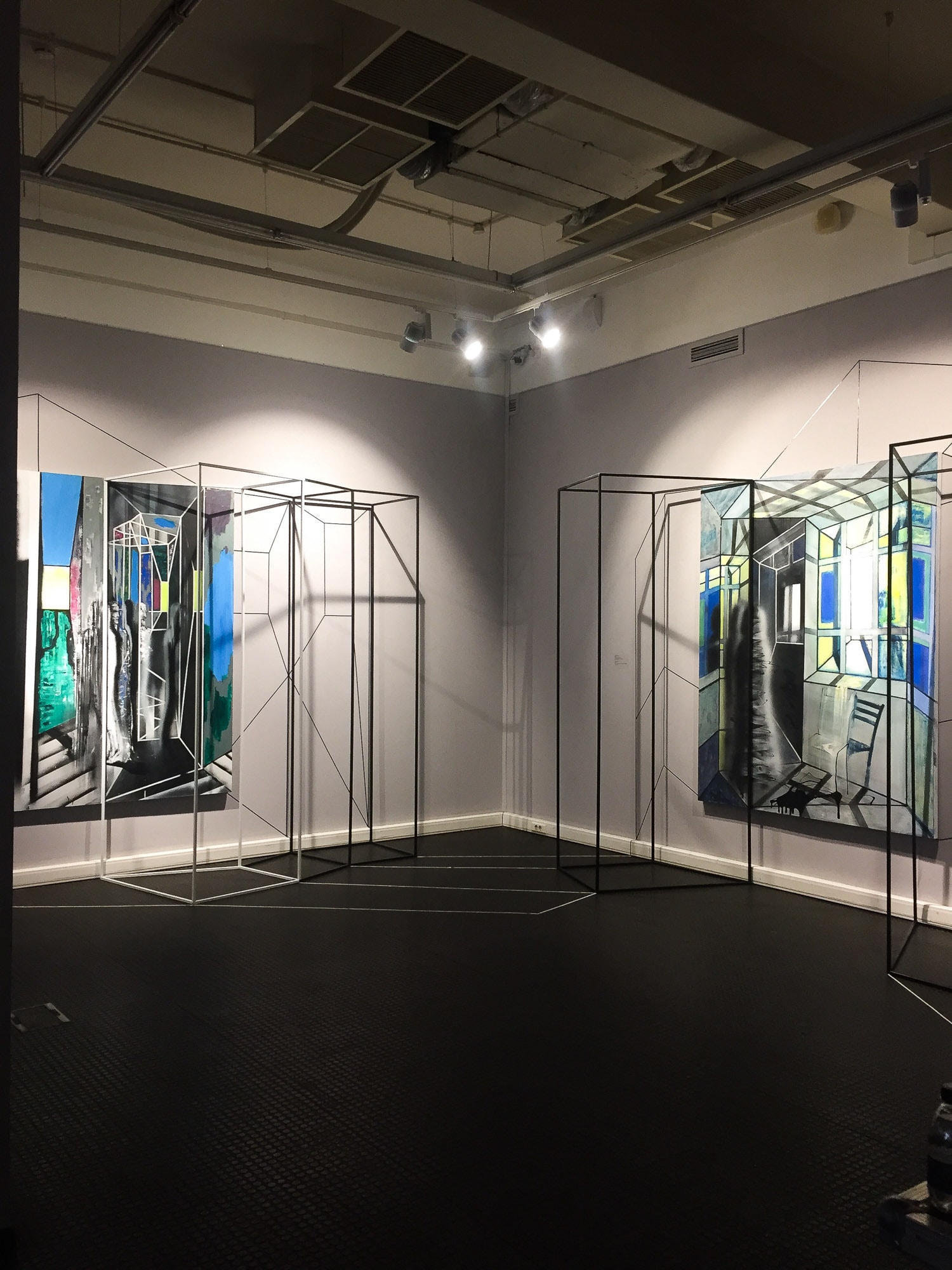
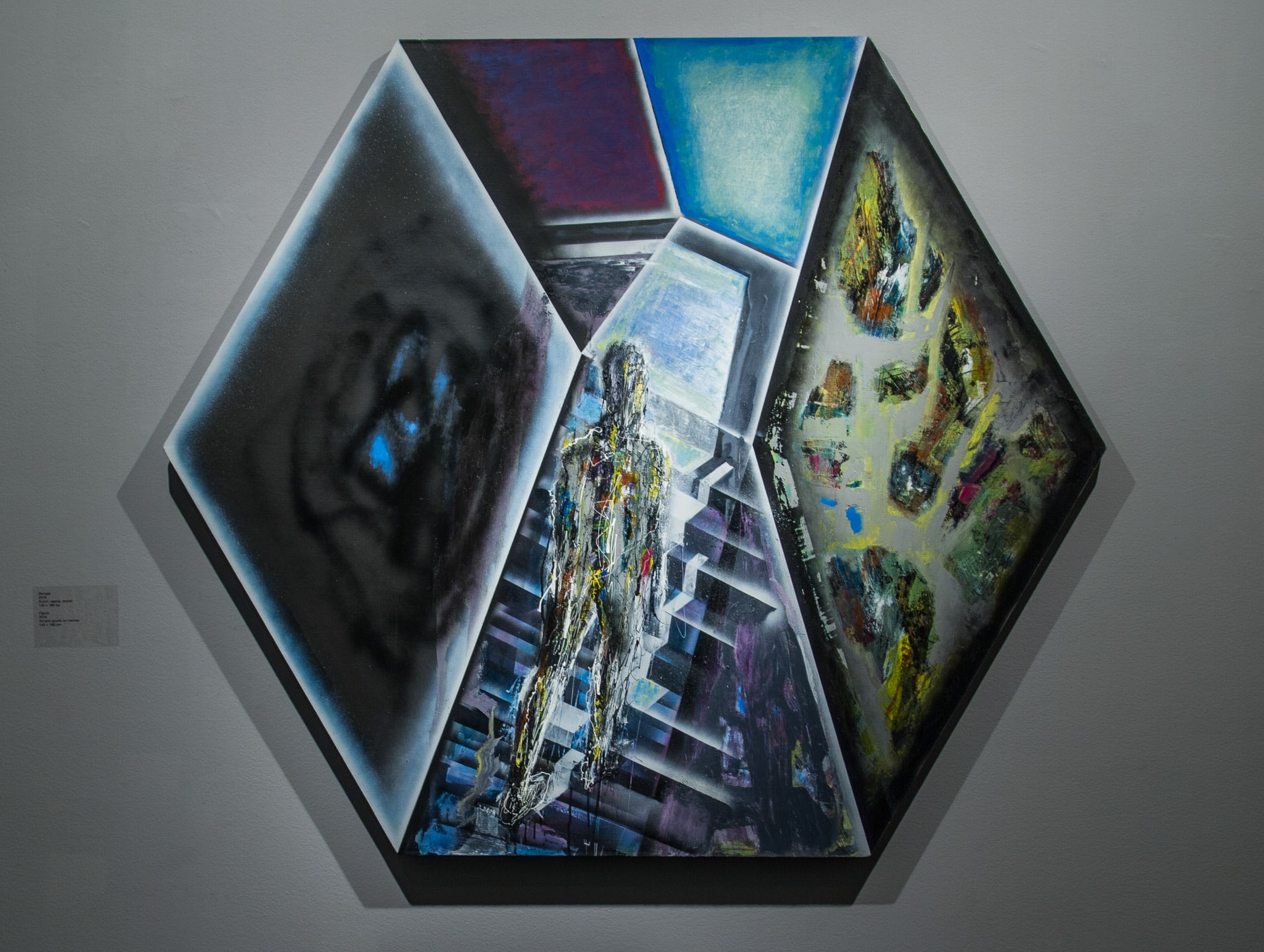
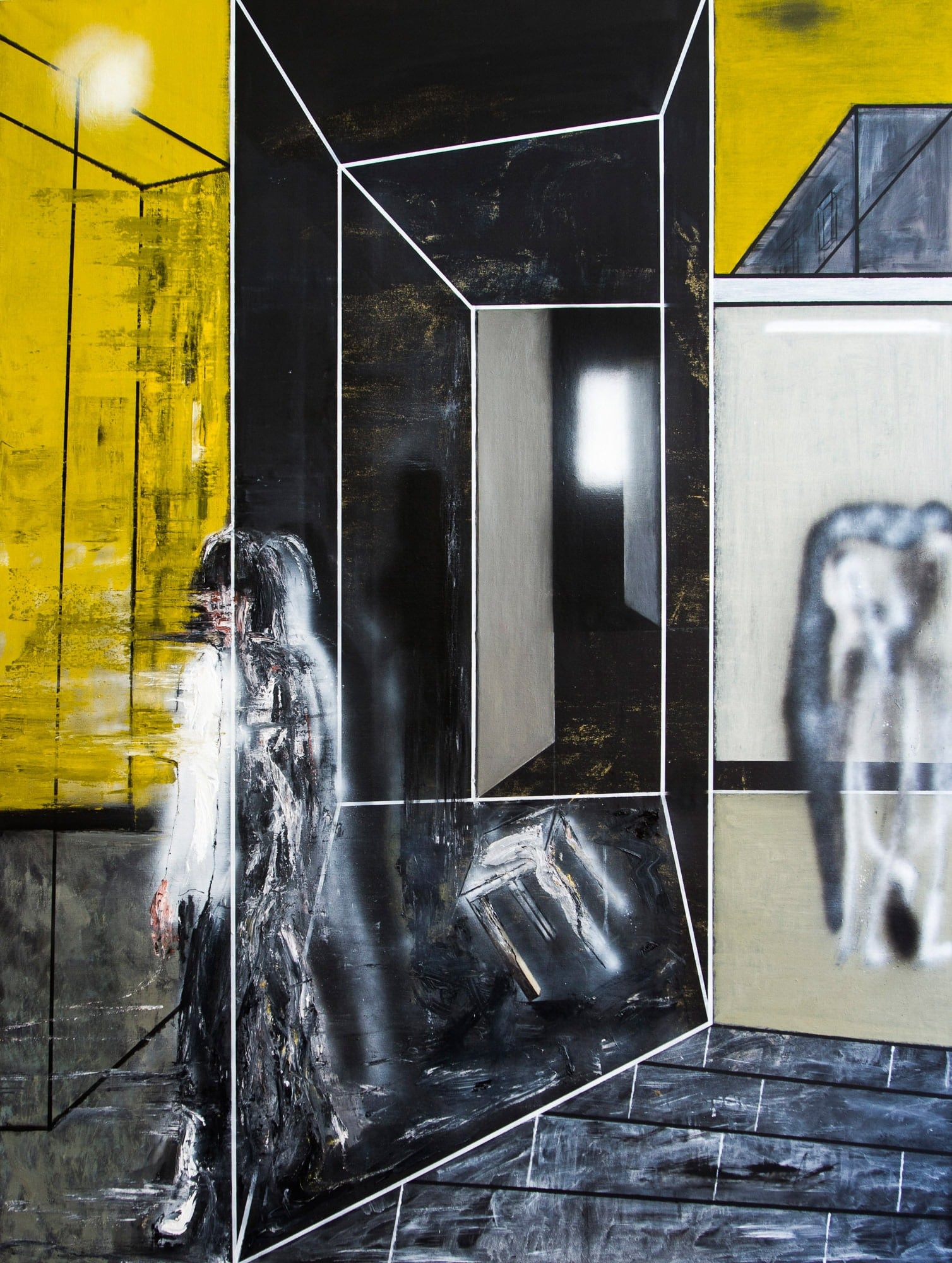
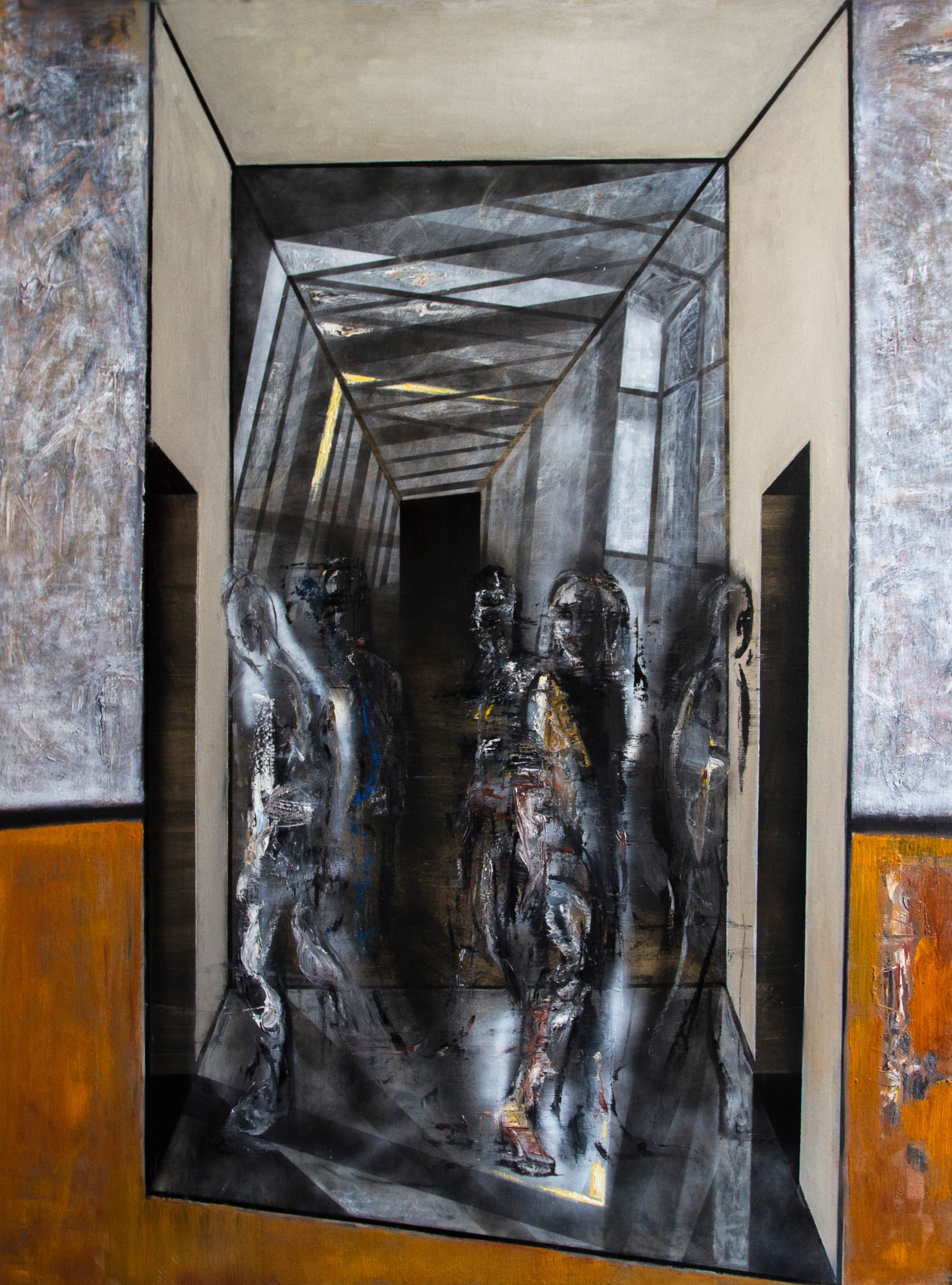
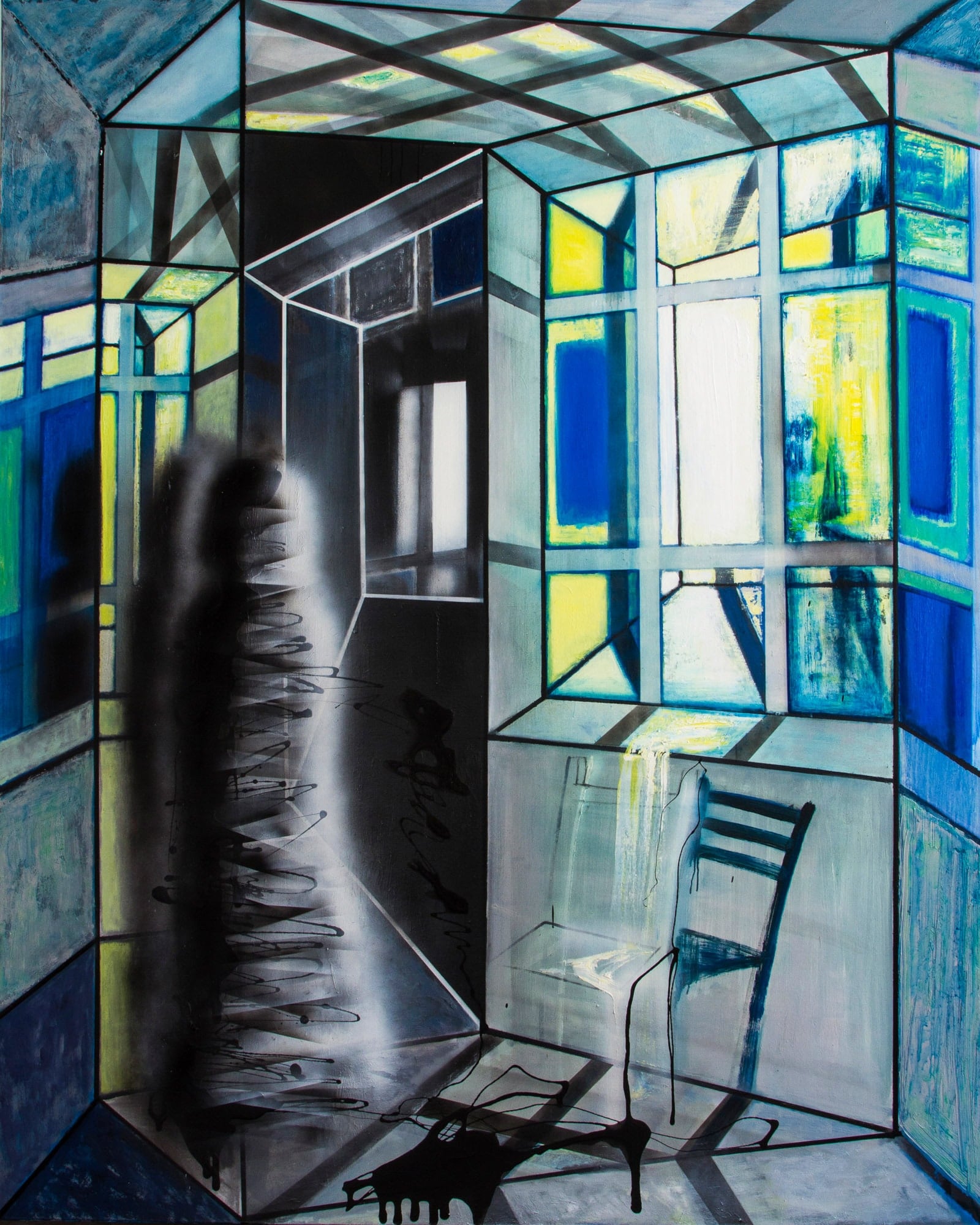
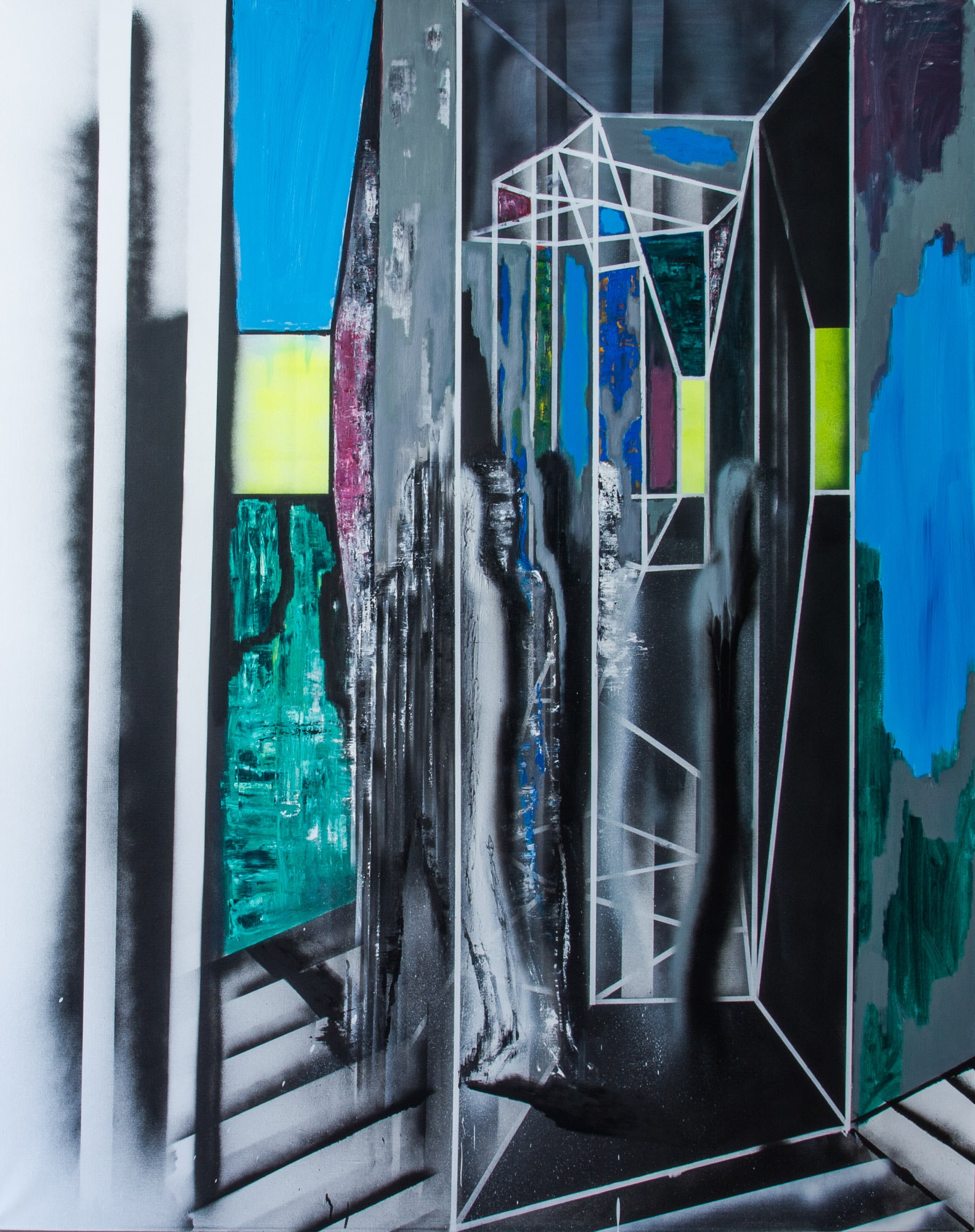
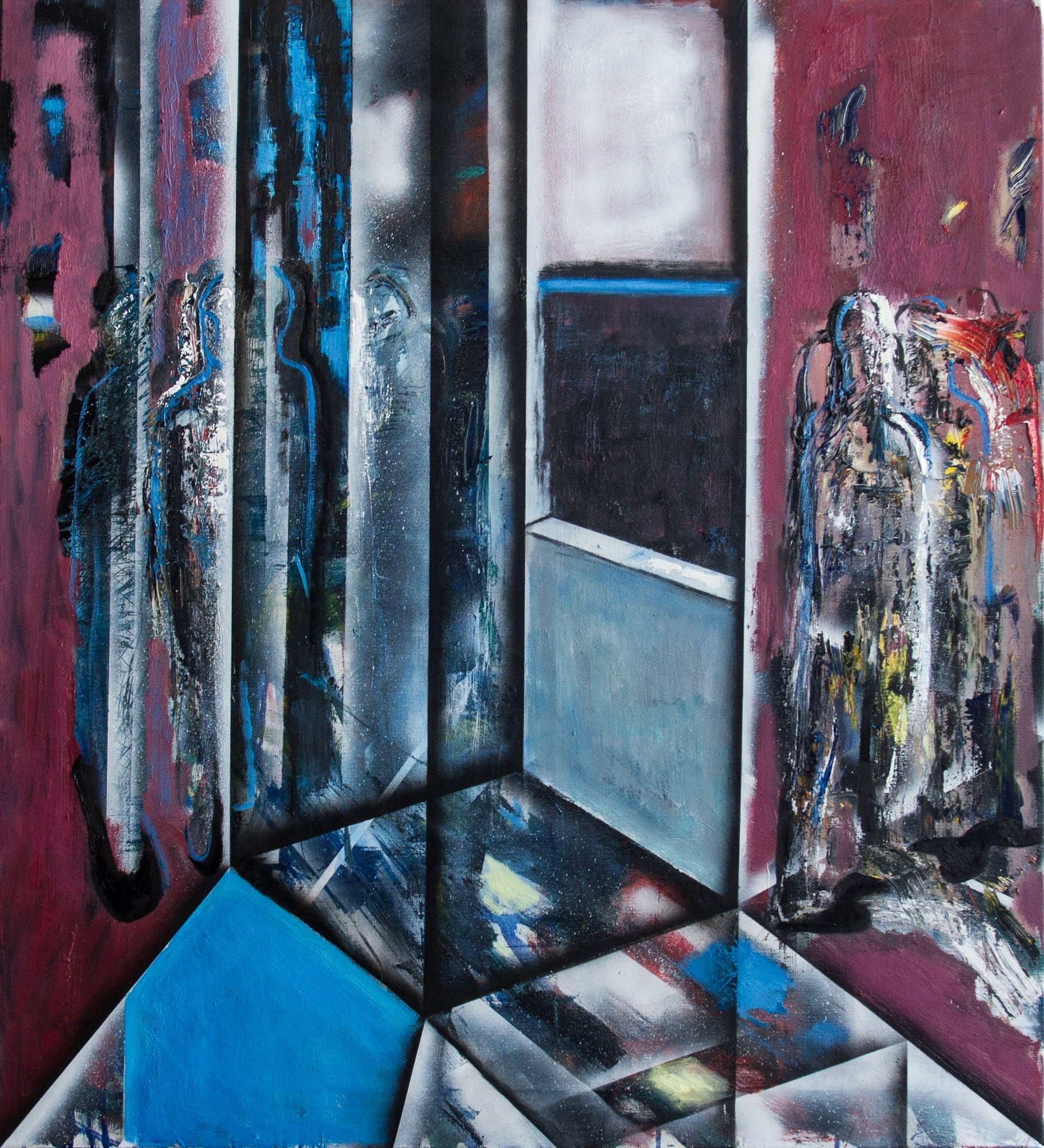
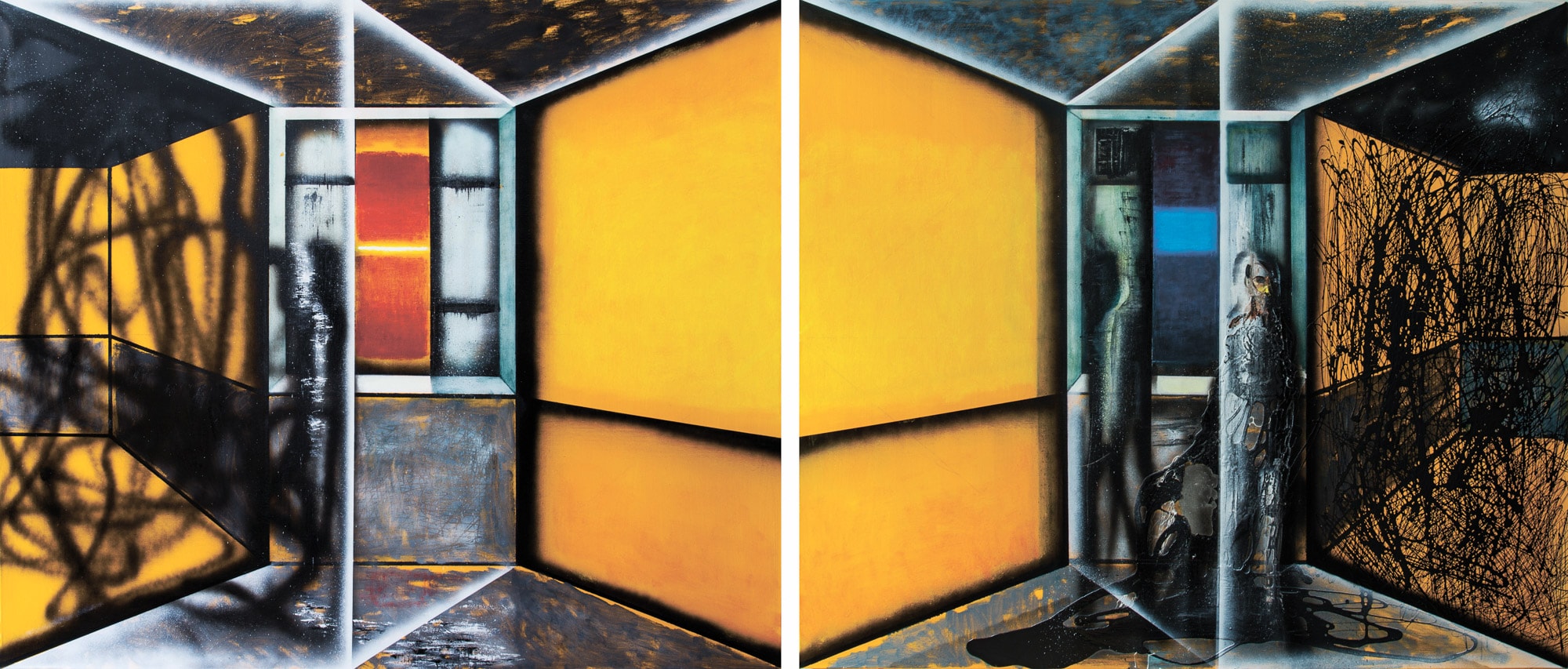
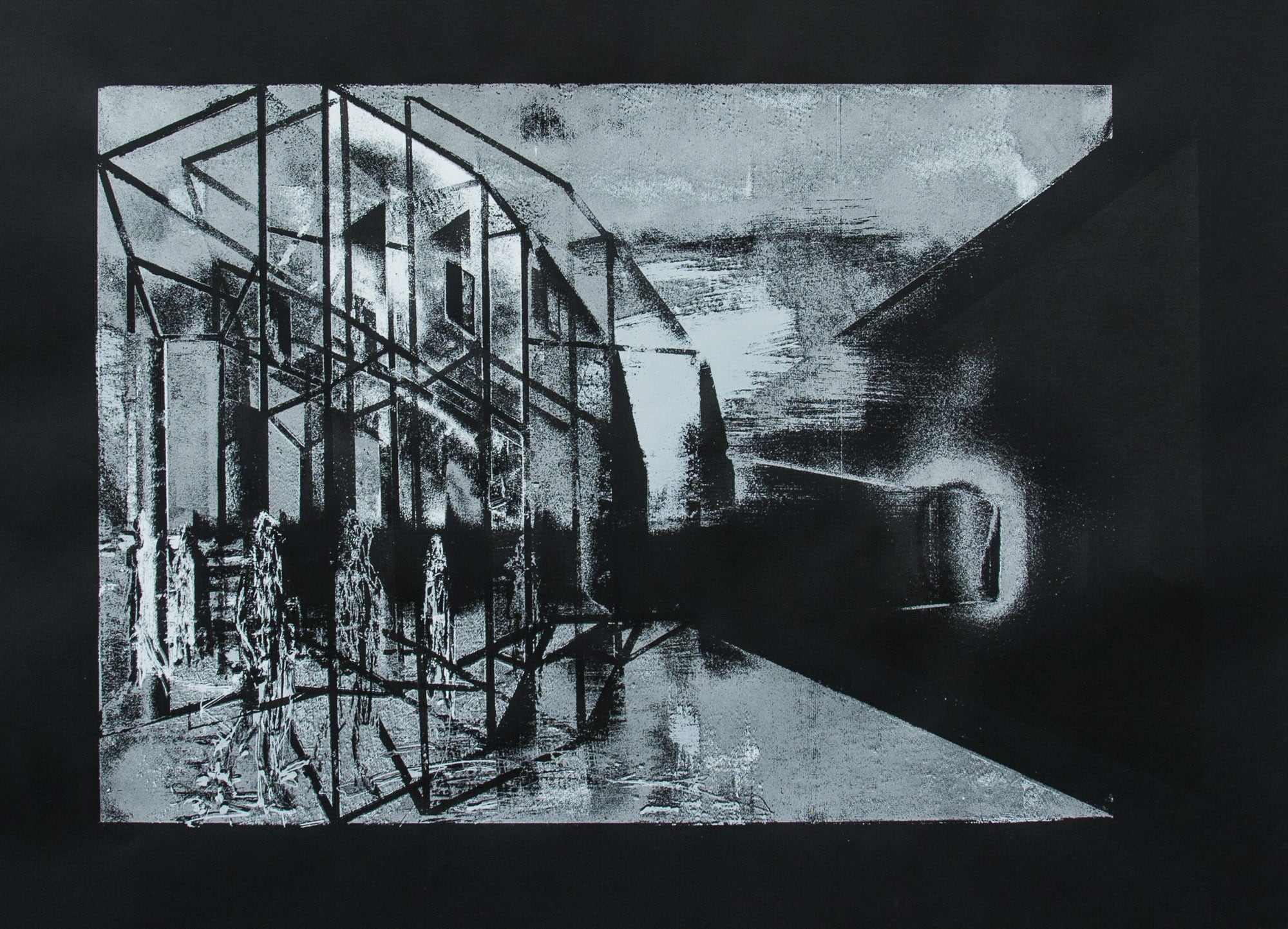
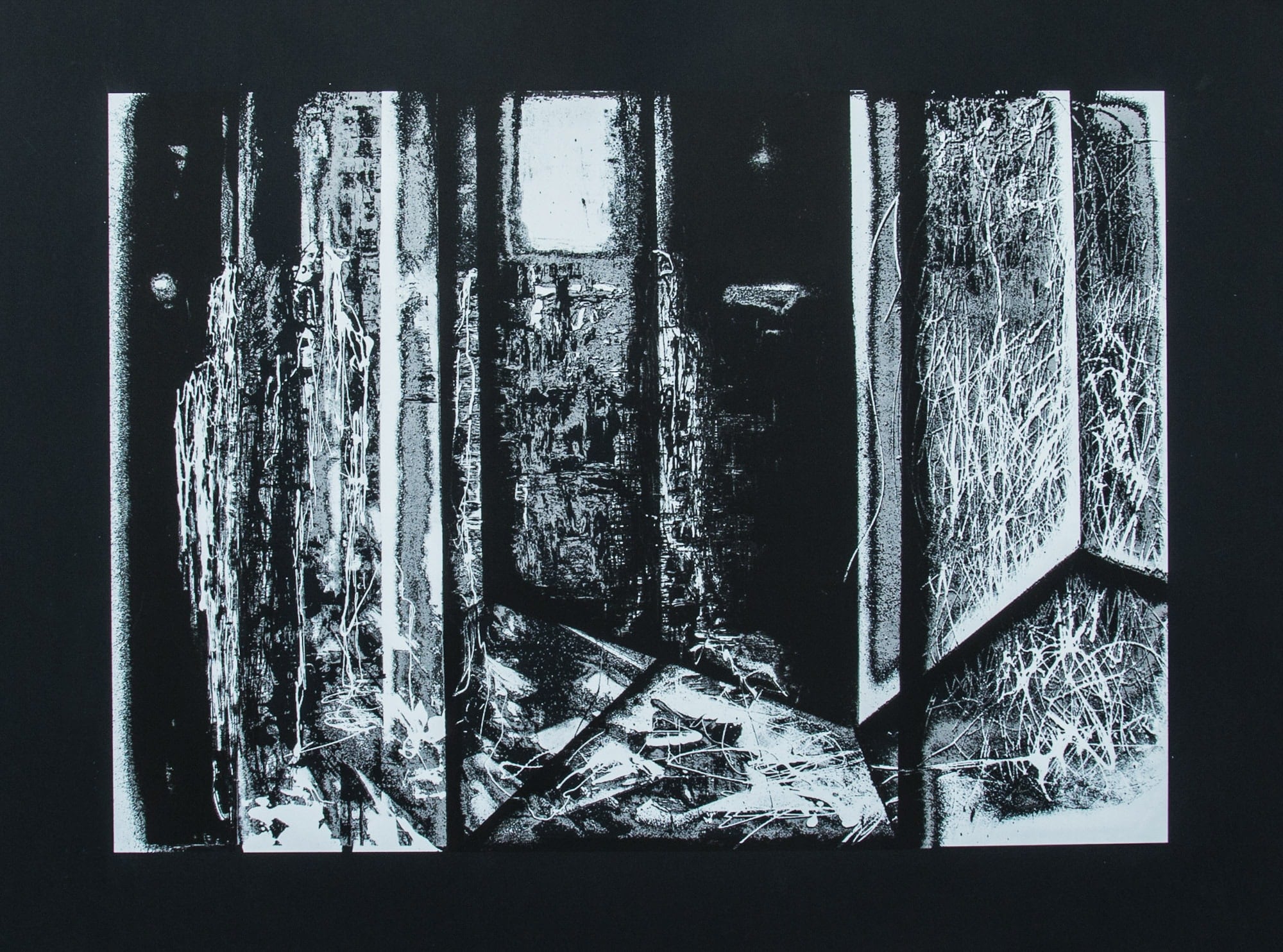
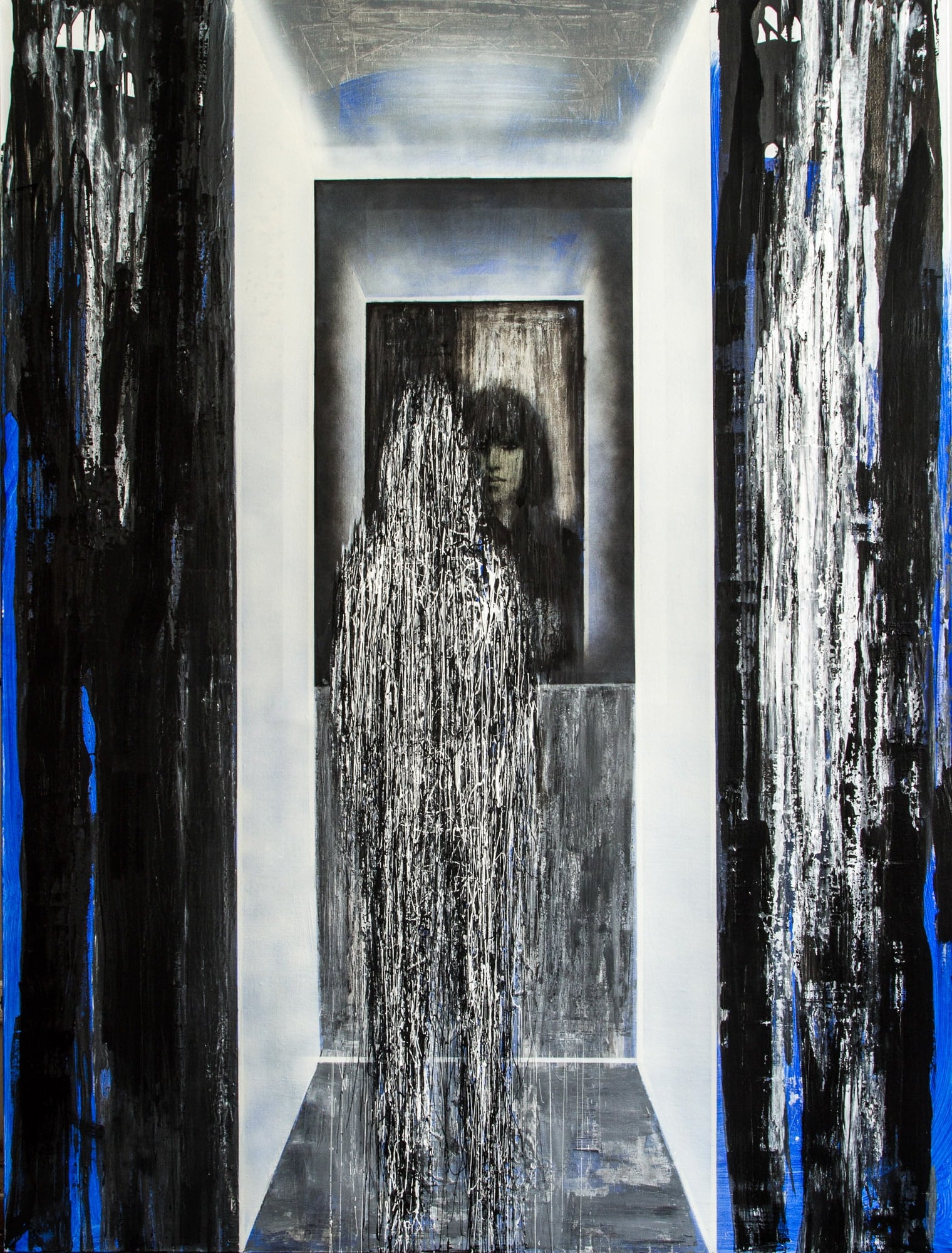
Works by Evgenia Voronova can be described as a symbiosis of abstract and figurative painting. Washed out, almost fully rubbed out human figures dissolve in a deep refracted space of color swathes. Physical metal structures that complement some of the paintings add to the multiple layers of the canvas and continue the geometry of the painting, but also create a new quasispace.
This space operates as a bridge between the viewer and the painting, merging their realities. The space in these paintings is, in a way, a projection of the artist's inner states, of her reflection on her feelings. This ephemeral world is inhabited by the author's inner self trapped in an emotional and mental labyrinth. The paintings become an attempt to process and understand interactions between the realities of the world and the transience of the inner world.