High Tension
Solo exhibition, Antonov Gallery,
Saint Petersburg, 2019
"Painting is structured in such a way that the very act of perceiving it becomes a form of suffering capable of deterring anyone who has not experienced the transformation of this torment into pleasure."
V. Salnikov
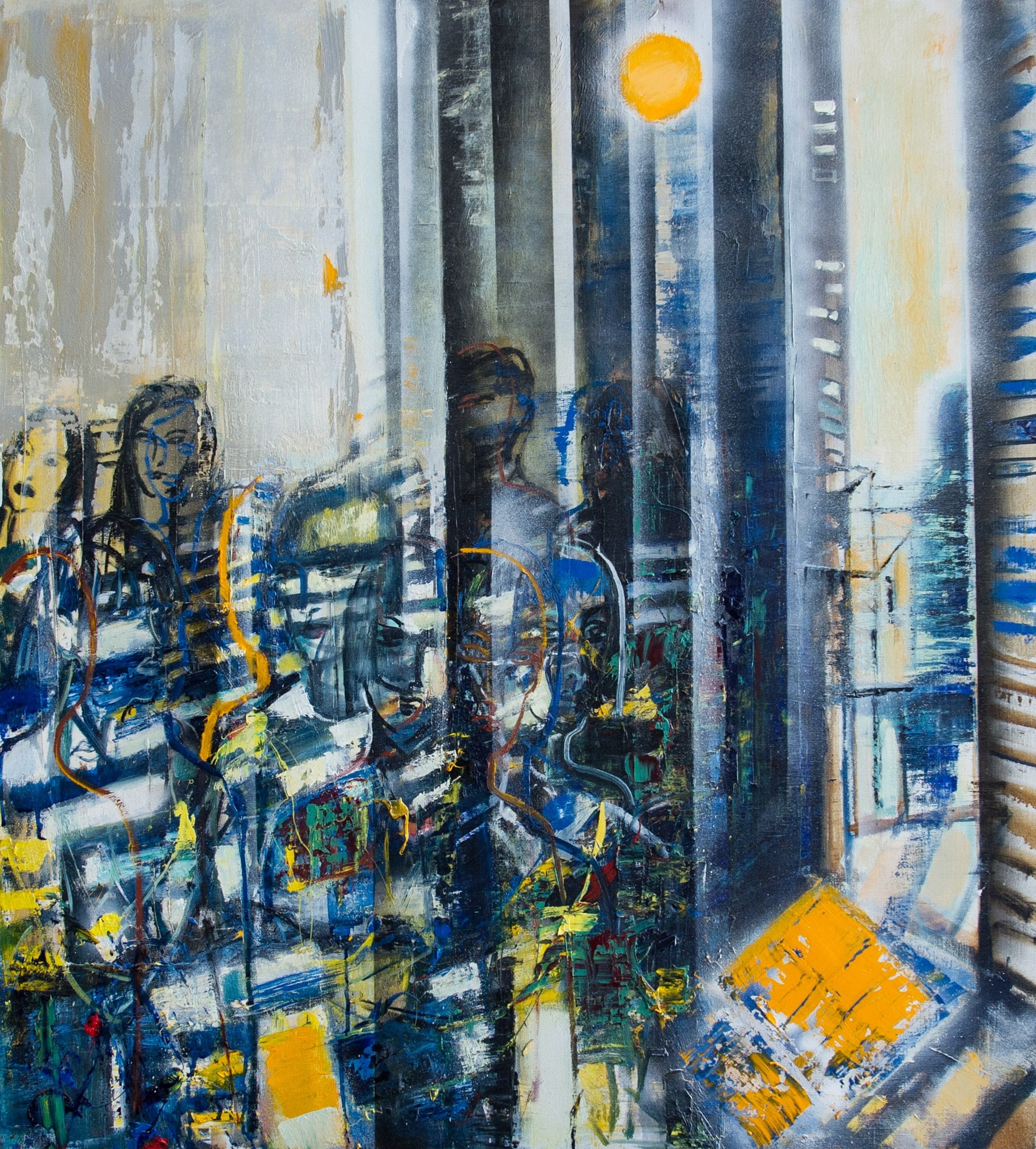
Our time offers us ever more information, expanding the boundaries of human perception. This new perception is fragmentary, disjointed, and fleeting. Is humanity today capable of a holistic perception of the world? Or do the fragments fail to come together into a whole?
The primary focus of the exhibition is the essential "Emptiness." In the paintings, the main focus is on empty space, rather than an object or a subject. To look at emptiness is always to see something, if only the ghost of one's own expectations. As Cage said: "There is no silence. Something is always happening and producing sound." This phrase also applies to a work of painting. The "silence" of the work leads to an intense, tense perception: the viewer does the work, travels the path, and peers into it.
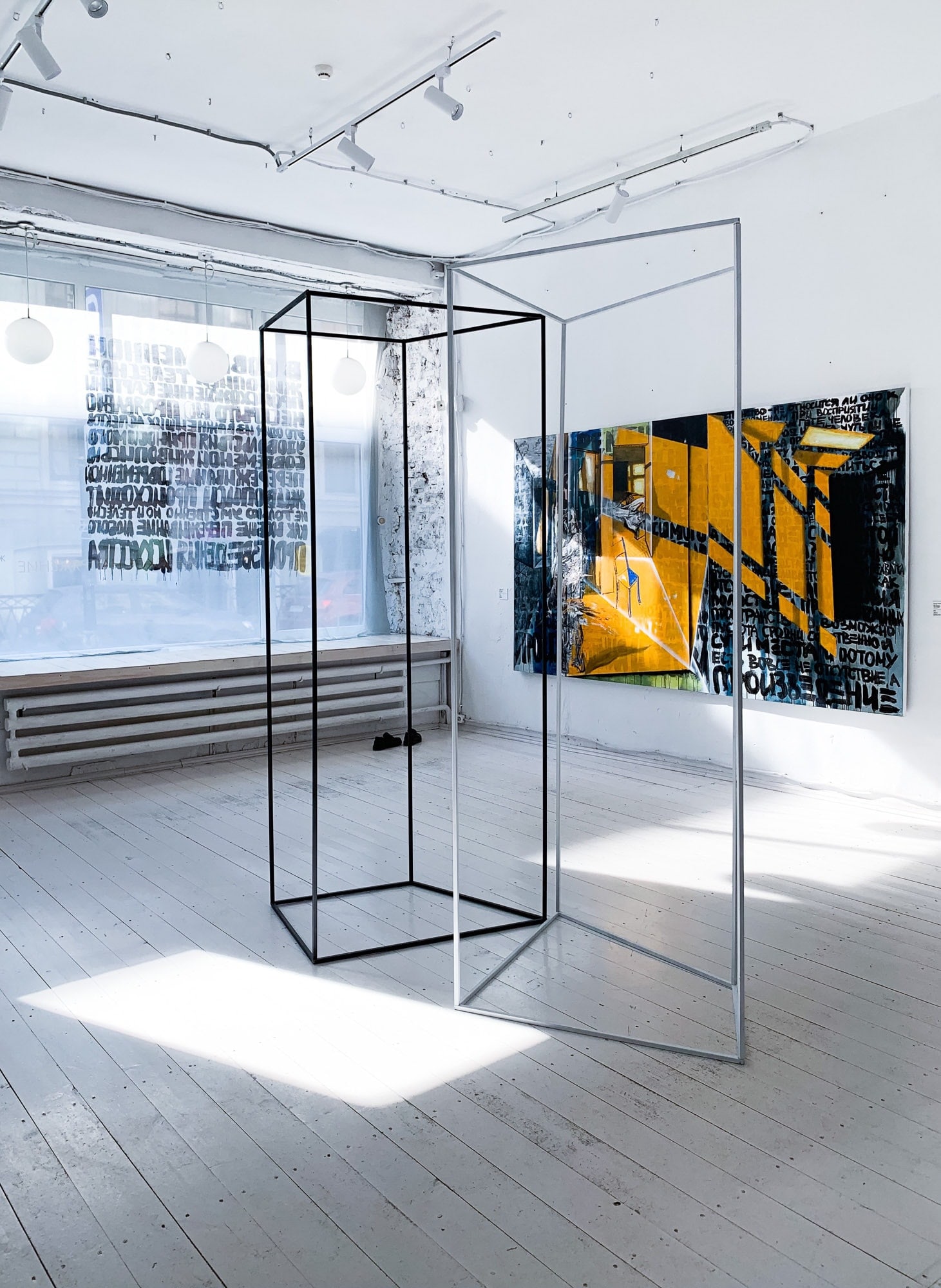
"Silence is a metaphor for a pure, unobtrusive gaze, befitting works of art that remain inert until they are noticed. The viewer approaches art as one would a landscape. A landscape does not require the viewer to understand it, acknowledge its significance, or feel fears or sympathies." The metal structures appearing next to the paintings delimit the "Zone of Space" and become the "Entrance" to the work. The text that appears on the canvases serves as the "Ground" for the pictorial image, just as a thought expressed by the artist in words subsequently becomes a "silent" work. And this tense "Emptiness" is the essence of space as a setting and as the action that this very place generates.